
Nazi and neo-Nazi symbols
Their depiction, historical origin, meaning and how they are used.
What do Nazi and neo-Nazi symbols represent?
Nazi and neo-Nazi symbols are signs, emblems, slogans and other visual markers that are historically or ideologically linked to Nazism, its organisations and present-day neo-Nazi movements.
These symbols played a significant role in the propaganda of Nazi Germany. They served to express membership of the Nazi movement, to spread its ideology, to consolidate power and to intimidate persecuted groups.
The Nazi regime misused and appropriated some originally historical or religious signs, together with their meaning. That is why it is essential to know the historical context when recognising them.
Overview of symbols
The table summarises the origin, meaning under Nazism and present-day use of six symbols. The display of these symbols on the IPSR website serves an exclusively educational and informational purpose: it is meant for prevention, recognition and understanding of their historical and present-day meaning. It does not promote them.
| Symbol | Name | Origin | Meaning under Nazism | Present-day use | Good to know |
|---|---|---|---|---|---|
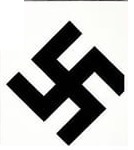 | Swastika | An ancient symbol known in many cultures (Asia, India, originally European cultures) as a sign of good fortune, life and the sun. | From 1920 the main symbol of the Nazi Party (NSDAP). It represented the ideology of "Aryan superiority", racism, persecution and genocide (of Jews, Roma and Sinti and other groups). | Used by neo-Nazis and far-right groups as a sign of racial hatred, extremism and ideological affiliation. | A swastika outside the Nazi context (for example in a religious or cultural setting) does not necessarily have an extremist meaning. The context, form and purpose of use are decisive. |
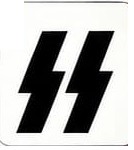 | SS (Schutzstaffel) | The emblem of the SS organisation, founded in 1925 as a protection unit of the NSDAP. | The SS was a key organisation of Nazi terror. It took part in persecution, deportations and the mass murder of millions of people, including Roma and Sinti. | The double SS rune appears in the symbolism of neo-Nazi groups, on clothing, patches, tattoos and online. | Use of the SS emblem is legally prohibited, for example, in Germany and Austria because it is a symbol linked to crimes against humanity. In Slovakia it is assessed under §§ 421 and 422. |
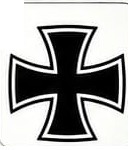 | Iron Cross (Eisernes Kreuz) | A Prussian military decoration from 1813. Originally it was not a Nazi symbol. | The Nazis adopted it into their military symbolism and used it as a sign of German military strength and expansion. | It appears in various variants also among far-right extremists, often in combination with other Nazi symbols. | The Iron Cross alone is not always proof of extremism. Its use together with Nazi ideology, racist slogans or SS symbols is problematic. |
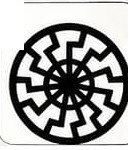 | Black Sun (Schwarze Sonne) | An ornament on the floor of Wewelsburg Castle, which was used by the SS. The name Black Sun became widespread only after the Second World War. | It is not reliably documented that it had under Nazism exactly the meaning that neo-Nazis attribute to it today. Its present-day ideological meaning arose mainly after the war. | It is popular among neo-Nazi, esoteric and far-right groups and is often used on jewellery, clothing and in online symbolism. | The Black Sun is today regarded as a symbol of neo-Nazi ideology. |
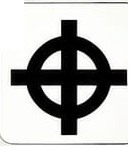 | Celtic Cross | An ancient Christian symbol widespread mainly in Ireland and other European countries. | Mainly after the Second World War, neo-fascists and neo-Nazis gave it a new meaning: a sign of the "white race" and of the struggle for its preservation. | Far-right extremist groups often use it as a symbol of racial identity, especially in combination with other far-right signs. | The Celtic Cross alone is not always extremist. Its use in the context of racist ideology, at demonstrations or in the symbolism of extremist organisations points to extremism. |
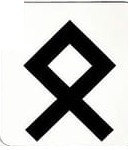 | Odal rune (Othala) | A Germanic rune that historically symbolised home, heritage, family and land. | It was used by some Nazi units and youth structures. It became a symbol of the "racial community", of blood and soil. | It appears in the symbolism of neo-Nazi and racist groups, often on clothing, flags and in organisation logos. | The Odal rune can also have a historical or cultural meaning. However, if it is used in connection with Nazi or racist ideology, it is an extremist symbol. |
Swastika (Hakenkreuz)
What does this symbol mean?
The swastika is one of the best-known symbols of Nazism. In the 20th century it became a sign of Nazi ideology, racial superiority, antisemitism, persecution and genocide.
It is inseparably linked with the regime of Adolf Hitler, the Second World War and the Holocaust, during which Jews, Roma and Sinti and other groups of the population were systematically persecuted and murdered.
Historical origin
The swastika is much older than Nazism. For thousands of years it was used in various cultures and religious traditions, above all in Asia, where it can symbolise good fortune, favour or spiritual values.
The Nazi movement appropriated this ancient sign and turned it into one of the main symbols of its racist ideology.
It is therefore important to distinguish between the original religious or cultural use of the swastika and its Nazi form.
The swastika in Nazi Germany
The Nazi Party used a black swastika in a white circle on a red background. The symbol appeared on flags, uniforms, buildings, propaganda posters and official markings.
It represented the power of the Nazi regime and its ideology, which divided people according to their supposed racial value.
Under this symbol people were persecuted, deported, forcibly sterilised, imprisoned and murdered en masse.
Connection to the Roma Holocaust
For Roma and Sinti, the Nazi swastika is a reminder of the genocide in which the Nazi regime and its allies persecuted and murdered the Roma population.
Roma families were subjected to racial registration, restrictions of their rights, deportations to concentration and extermination camps, and systematic violence.
The swastika is therefore not merely a historical sign. It is also a symbol of the suffering of the victims and a warning about the consequences of racism and hateful ideology.
How is it used today?
The Nazi swastika can appear in the activities of neo-Nazi groups, for example as:
- graffiti on buildings, schools or memorials,
- a tattoo or a mark on clothing,
- an image or profile icon on social media,
- part of intimidation or hateful messages.
Important: A historical, museum, educational or religious depiction of the swastika cannot automatically be regarded as promotion of Nazism. What matters are the circumstances, the form of the symbol and the purpose of its use.
Why is it important to recognise it?
Knowing Nazi symbols helps to recognise expressions of hatred, intimidation and neo-Nazi propaganda. It also makes it easier to understand the historical experience of the victims of Nazism.
In a Nazi context, the swastika is not an innocent decoration. It is the symbol of an ideology that deprived millions of people of their freedom, dignity and lives.
SS – Schutzstaffel
What does the SS symbol mean?
The SS symbol consists of two stylised runes resembling lightning bolts. It was the official emblem of the Nazi organisation Schutzstaffel (SS), which was one of the main instruments of terror, racial persecution and genocide in Nazi Germany.
The SS played a key role in organising the Holocaust, deportations and the mass murder of millions of people.
Origins and historical significance
The SS was founded in 1925 as a protection unit of the Nazi movement. Under the leadership of Heinrich Himmler it gradually grew into a vast apparatus of power.
It comprised various branches, including units responsible for running the concentration camps, security and police structures, and the armed units of the Waffen-SS.
SS members took part in political terror, deportations, mass executions, the persecution of the population and other crimes of the Nazi regime.
The SS and the Roma Holocaust
The SS played a significant role in the Nazi persecution of Roma and Sinti.
Members of the Nazi repressive apparatus took part in deporting Roma families and in imprisoning and murdering them in concentration and extermination camps.
In the Auschwitz-Birkenau complex there was a separate camp section to which thousands of Roma and Sinti were deported, including children, women and elderly people.
On the night of 2 to 3 August 1944, SS members murdered about 4,300 remaining Roma prisoners of this camp section.
The second of August is now the European Roma Holocaust Memorial Day.
What does the SS symbol look like?
The best-known emblem consists of two angular runes placed side by side, resembling a pair of lightning bolts.
The symbol was found on uniforms, insignia, documents and other markings of the Nazi organisation SS.
Its original graphic form was based on a stylisation of a historical rune, to which the Nazis gave their own ideological meaning.
Use of the symbol today
The SS symbol still appears in neo-Nazi circles as an expression of identification with Nazism or admiration for the Nazi regime.
It can be found, for example, on:
- tattoos and clothing,
- stickers and graffiti,
- online profiles and images,
- items connected with neo-Nazi propaganda.
Some extremist groups also use altered or stylised versions of the symbol.
Why is this symbol dangerous?
The double SS rune is not merely a historical emblem of a military or security organisation. It is tied to a specific system of terror, persecution and genocide.
Using it to glorify Nazism or to intimidate people can be an expression of extremism and, depending on the circumstances, also unlawful conduct.
The historical, museum, documentary and educational depiction of the symbol must be distinguished from its promotion.
IPSR's message
For the descendants of the victims of Nazi persecution, the SS symbol is a reminder of the tragic fates of their families and communities.
To know its meaning is to understand how a racist ideology can, through state institutions and armed organisations, turn into systematic violence.
Remembering the crimes of the SS is part of protecting historical memory and human dignity and of preventing genocide from happening again.
Iron Cross (Eisernes Kreuz)
What is the Iron Cross?
The Iron Cross is a historical military symbol and decoration originating in Prussia. It was created in 1813 during the Napoleonic Wars and later became part of the German military tradition.
Although it was also used during the Nazi regime, the Iron Cross is not Nazi in origin.
Its meaning changes depending on the historical period, the graphic design and the circumstances in which it is used.
The Iron Cross in Nazi Germany
After Adolf Hitler came to power, the Iron Cross was incorporated into the system of military decorations of Nazi Germany.
In 1939 the Nazi regime reinstated its award. The decorations from this period also bore the swastika, which was the official symbol of Nazi ideology.
The Iron Cross was awarded to members of the German armed forces for military merit.
In this historical context it became part of the military symbolism of the state that unleashed the Second World War and carried out systematic persecution and genocide.
Use of the Iron Cross today
The Iron Cross still appears today. However, not every use of it is an expression of neo-Nazism.
Various forms of this symbol are used in military heraldry, historical publications, museums and other areas.
The German armed forces, the Bundeswehr, use a related cross emblem as part of their official symbolism.
At the same time, however, some neo-Nazi and right-wing extremist groups use historical military symbols, including the Iron Cross, to express admiration for Nazi Germany or to create a link with its military tradition.
When can the Iron Cross point to extremism?
When assessing a symbol, it is important to pay attention above all to its connection with other signs and expressions.
A warning sign can be, for example:
- the Iron Cross combined with the swastika or SS symbols,
- its use together with neo-Nazi number codes, for example 88 or 18,
- its appearance on materials glorifying Adolf Hitler or the Nazi regime,
- its use in the propaganda of groups that spread racial hatred or defend Nazi crimes.
The mere appearance of the Iron Cross without further context, however, is not enough to conclude that the person using it supports extremism.
The Iron Cross and historical memory
When teaching about Nazism, it is important to distinguish between the original historical meaning of a symbol and its later ideological misuse.
The Iron Cross is an example of how an older military symbol can be taken over by an authoritarian regime and used in its propaganda.
To understand the Nazi past, it is therefore necessary to examine not only the sign itself but also the period, its specific form and the way it is used.
Is the use of the Iron Cross prohibited?
In Slovakia, not every depiction of the Iron Cross is automatically prohibited.
The legal assessment depends on the specific circumstances, above all on whether the symbol is used to promote a movement aimed at suppressing fundamental rights and freedoms, or in connection with other unlawful conduct.
Historical, documentary, artistic and educational use must be distinguished from the promotion of an extremist ideology.
IPSR's message
Not every historical military symbol is automatically extremist. What matters is who uses it, in what form, for what purpose and in what context.
The task of education is to help the public recognise genuine expressions of neo-Nazism, understand the historical context of symbols and prevent the spread of racist and hateful ideologies.
Black Sun (Schwarze Sonne)
What is the Black Sun?
The Black Sun, in German Schwarze Sonne, is a symbol made up of a circular arrangement of twelve stylised characters resembling runes.
Today it is among the recognisable symbols used in neo-Nazi and far-right extremist circles.
It is associated with racist ideologies, notions of the supposed superiority of the so-called Aryan race and modern attempts to revive Nazi symbolism.
Historical origin and connection to Nazism
The best-known historical depiction of this ornament is on the floor of the north tower of Wewelsburg Castle in Germany.
During the Nazi regime the castle was used by the SS under the leadership of Heinrich Himmler. Himmler planned to turn Wewelsburg into an important ideological and ceremonial centre of the SS.
On the floor of one of the halls a circular ornament was created, consisting of twelve radiating elements.
It is important, however, to distinguish between historical facts and later interpretations.
There is no reliable evidence that the Nazis called this ornament the Black Sun or that during the Nazi regime it had exactly the meaning that neo-Nazi groups attribute to it today.
The name Schwarze Sonne and its present-day ideological meaning spread mainly after the Second World War.
Why do neo-Nazi groups use it?
In the post-war period the Black Sun became part of neo-Nazi symbolism and of right-wing extremist notions of a Germanic past, racial superiority and Nazi ideology.
Some groups use it as an alternative to openly Nazi symbols, for example the swastika.
Such use makes it possible to express ideological affiliation through signs whose meaning the general public may not know.
The symbol also appears in the world of racist esotericism and in neo-Nazi subcultures.
Where might we encounter the Black Sun?
The symbol can appear:
- on clothing, patches and accessories,
- on tattoos,
- on flags, stickers and posters,
- on online profiles and social media,
- in propaganda materials of neo-Nazi groups,
- in combination with other racist or Nazi symbols.
When recognising it, it is important to look at the exact form of the symbol and the context in which it is used.
Not every circular ornament or sun motif is the Black Sun.
The Black Sun and racist ideology
In neo-Nazi circles the Black Sun can stand for a reference to the Nazi organisation SS, racial superiority or notions of restoring Nazi ideology.
Such ideologies are incompatible with the principles of equality of all people, human dignity and a democratic society.
For Roma communities, knowing these symbols is also important in view of the historical experience of Nazi persecution and the genocide of Roma and Sinti.
Is the use of the Black Sun prohibited?
In Slovakia, not every depiction of the Black Sun is automatically a criminal offence.
The legal assessment depends on the circumstances of its use, above all on whether it serves to promote or support movements aimed at suppressing fundamental rights and freedoms.
If the symbol is used together with neo-Nazi slogans, in glorifying Nazism or in spreading racial hatred, it can be part of conduct assessed under the relevant provisions of the Slovak Criminal Code.
A distinction must be made between the promotion of extremism and the historical, scientific, journalistic or educational depiction of the symbol.
Why is it important to know this symbol?
Neo-Nazi ideologies are not spread only through open expressions of hatred. They also use symbols, number codes, graphic markings and hidden messages.
A person can come across them on the internet, on clothing or in public spaces without knowing their meaning.
Education about these symbols helps to recognise extremist propaganda, to prevent its normalisation and to strengthen society's resilience to racism.
IPSR's message
The Black Sun is an example of how neo-Nazi groups appropriate historical ornaments and turn them into symbols of their ideology.
Knowing its historical background and its present-day misuse is an important part of preventing extremism, protecting human rights and preserving historical memory.
We present the symbol and its historical background solely for educational, documentary and preventive purposes.
Celtic Cross (Keltenkreuz)
What is the Celtic Cross?
The Celtic Cross is a historical symbol in the form of a cross with a ring around its centre. It is associated above all with the Christian tradition of Ireland and the British Isles.
Historical Celtic Crosses are found in cemeteries, churches, memorials and other religious or cultural monuments.
The Celtic Cross is not Nazi in origin. However, some far-right and neo-Nazi groups have misused its historical and religious meaning to promote racist ideologies.
How did the Celtic Cross end up in extremist circles?
After the Second World War, some European neo-fascist and neo-Nazi organisations began to use a stylised form of the Celtic Cross as their political emblem.
In extremist circles the symbol gradually came to be associated with notions of the supposed superiority of the white race, ethnic exclusivity and the rejection of equality among people.
Some organisations used it as an alternative to openly Nazi symbols.
Particularly widespread is the simple graphic form in which the short arms of the cross extend beyond the ring. This version appears in the propaganda of several racist and neo-Nazi groups.
What does the symbol mean in neo-Nazi circles?
In the neo-Nazi and racist subculture the Celtic Cross can stand for:
- support for the ideology of white supremacy,
- membership of a racist or neo-Nazi movement,
- rejection of ethnic and cultural diversity,
- identification with ultranationalist and neo-fascist organisations,
- the spreading of racial hatred and discriminatory attitudes.
These meanings cannot, however, be automatically attributed to every historical or religious depiction of the Celtic Cross.
Where might we encounter this symbol?
In extremist circles the Celtic Cross can appear:
- on clothing, patches and badges,
- on tattoos,
- on flags and banners,
- on stickers and graffiti,
- on online profiles and social media,
- in propaganda materials of neo-Nazi organisations.
When assessing it, it is important to note the specific form, accompanying slogans, other symbols and the circumstances of use.
How to recognise its extremist misuse
An important warning sign is when the Celtic Cross appears together with:
- the swastika or SS symbols,
- the number codes 14, 18 or 88,
- slogans promoting white supremacy,
- propaganda of neo-Nazi organisations,
- expressions of hatred towards Roma, Jews, migrants or other groups of the population.
The symbol alone, without further context, need not be proof of extremist beliefs.
The Celtic Cross and racism against Roma
Neo-Nazi and racist ideologies often describe ethnic minorities as inferior, undesirable or a threat to society.
Roma and Sinti are among the groups that were historically subjected to racial persecution, including genocide during the Second World War.
Even today they can become targets of hateful propaganda, intimidation and violence by extremist groups.
It is therefore important to recognise not only openly Nazi symbols but also historical signs that were taken over and misused by racist movements.
Is the use of the Celtic Cross prohibited?
In Slovakia, not every depiction of the Celtic Cross is automatically prohibited.
The legal assessment depends on the circumstances of its use and on whether it is part of the support or promotion of a movement aimed at suppressing fundamental rights and freedoms, or of other unlawful conduct.
Historical, religious, cultural, artistic and educational use of the symbol must be distinguished from its use to spread a racist ideology.
Why is it important to know this symbol?
The Celtic Cross shows that extremist groups do not have to use only symbols created by the Nazi regime.
They can also appropriate older cultural and religious signs and then attribute a new political and racist meaning to them.
That is precisely why, in education, it is important to explain the historical origin of symbols, their later misuse and the circumstances in which they are used.
IPSR's message
A historical or religious symbol can become a tool of extremist propaganda if a racist movement uses it to express its ideology.
Knowing these connections helps the public recognise neo-Nazi propaganda without wrongly labelling all historical or religious expressions as extremism.
The aim of IPSR is to promote historical education, critical thinking, the protection of human dignity and the prevention of racism and extremism.
We present the symbol solely for educational, documentary and preventive purposes.
Odal rune (Othala)
What is the Odal rune?
The Odal rune, also called Othala or Othalan, is a historical character of the Germanic runic alphabet.
Originally it denoted inherited property, family ownership or inheritance. Its historical use predates the emergence of Nazism by many centuries.
The rune has a characteristic diamond shape, with two slanting lines extending from its lower part.
The Odal rune is not Nazi in origin. However, the Nazi regime took over its form and used it in connection with racial ideology, notions of descent, blood and belonging to the nation.
How did the Nazis misuse the Odal rune?
Nazi ideology attached extraordinary importance to descent, heredity and supposed racial purity.
Nazi organisations therefore used historical Germanic signs to create an image of their own exceptionality and historical superiority.
The Odal rune appeared in the symbolism of some Nazi organisations and units.
It was used, for example, by the 7th SS Volunteer Mountain Division "Prinz Eugen", which operated in the Balkans during the Second World War and whose members took part in war crimes.
The Odal sign was also used by some Nazi youth structures.
In this way the Nazis attached a political and racial meaning to a historical sign that was not identical with its original function in the runic alphabet.
The Odal rune and Nazi racial ideology
Nazi propaganda used notions of family descent and heredity to justify the racial division of people.
According to Nazi ideology, people were to be judged by their descent and their supposed membership of a superior or inferior race.
Such notions became the basis of discriminatory laws, forced sterilisations, deportations, persecution and genocide.
Among the victims of Nazi racial policy were also Roma and Sinti, whom the Nazi regime systematically persecuted and murdered.
Use of the Odal rune today
The Odal rune still appears in various settings today.
It can be used in historical research, in the study of runic writing or in cultural and religious contexts.
At the same time, however, it is also used by some neo-Nazi and racist organisations.
In extremist circles it can symbolise:
- notions of supposed racial purity,
- the superiority of a particular ethnic group,
- a reference to the Nazi ideology of blood and soil,
- identification with historical Nazi organisations,
- rejection of ethnic and cultural diversity.
How to recognise extremist use of the Odal rune
When assessing it, it is important to look not only at the symbol itself but also at its graphic form and the circumstances of use.
Special attention should be paid to the version with added curved or angled endings on the lower arms, which appeared in Nazi symbolism.
Warning signs can be:
- the rune combined with SS symbols or the swastika,
- its use together with neo-Nazi slogans,
- its appearance in the propaganda of racist organisations,
- a connection with the number codes 18 or 88,
- its use to express racial superiority or hatred towards minorities.
The mere depiction of the historical rune, however, does not automatically mean that the person using it holds neo-Nazi views.
Where might we encounter this symbol?
The Odal rune can appear:
- on tattoos,
- on clothing and patches,
- on flags and banners,
- on stickers and graffiti,
- in online discussions and on social media,
- in historical publications and educational materials.
When recognising it, it is necessary to distinguish historical use from the promotion of an extremist ideology.
Is the use of the Odal rune prohibited?
In Slovakia, not every depiction of the Odal rune is automatically prohibited.
The legal assessment depends on the specific circumstances, above all on whether the symbol is used to support or promote a movement aimed at suppressing fundamental rights and freedoms.
Its combination with other Nazi signs, hateful expressions or propaganda materials can be significant.
Historical, scientific, documentary and educational use must be distinguished from the promotion of neo-Nazism.
Why is it important to know this symbol?
The Odal rune shows how extremist organisations can take over historical signs and attach a new ideological meaning to them.
For the public it can be difficult to tell when a symbol is historical and when it is a deliberate reference to Nazi ideology.
Education must therefore explain the origin of the symbol, its use during the Nazi regime and its present-day misuse.
IPSR's message
The historical origin of a symbol does not excuse its misuse to spread racism and hatred.
Knowing the Odal rune and its connection with Nazi ideology helps us better understand how extremist groups use symbolism to express their attitudes.
The aim of IPSR is to promote historical memory, critical thinking and the ability to recognise expressions of neo-Nazism, antisemitism and antigypsyism.
We present the symbol solely for educational, documentary and preventive purposes.
Other symbols and motifs
| Symbol or motif | Description |
|---|---|
| SS-Totenkopf | A skull and crossbones used by the SS units of the Nazis. It differs from the common skull symbol in general use. |
| Reich eagle | The Nazi state emblem: an eagle with a swastika (1935 to 1945). The eagle as such is much older and is still used in German state symbolism today. |
| DAF cogwheel | The symbol of the German Labour Front (Deutsche Arbeitsfront, DAF), a mass organisation of the Nazi regime that united employees and employers. |
| Black-white-red imperial flag | A historical German flag (German Empire 1871 to 1918, later also the merchant flag of the Weimar Republic and, from 1933 to 1935 together with the swastika flag, a Nazi flag). Today it is also used by some far-right and neo-Nazi groups. |
| Blut und Boden – Blood and Soil | A Nazi racial and territorial concept that linked descent, race and territory. It stressed the alleged bond between the "German nation" and its land. |
| Other rune motifs (Wolfsangel, wolf's hook, and the life rune, Lebensrune) | Rune signs that the Nazis adopted and turned into ideological symbols. Runes as such are not automatically extremist; the context and manner of use are decisive. |
IPSR educational material. A symbol, mark or expression on its own, without context, does not automatically prove extremism or a criminal offence.