
Roma Holocaust
History, victims, commemoration of events, documents and education.
History of the Roma Holocaust
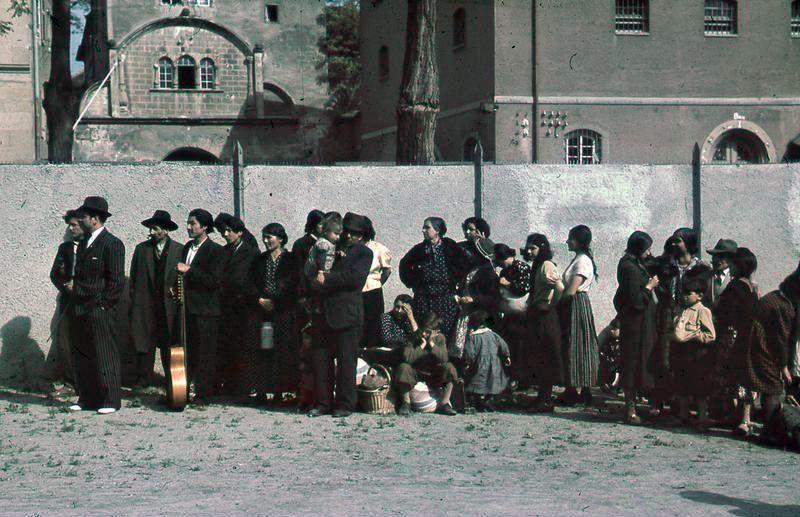
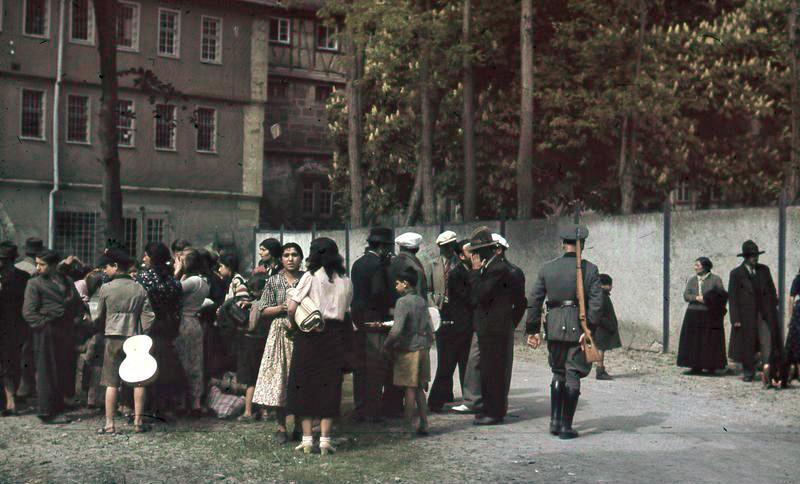
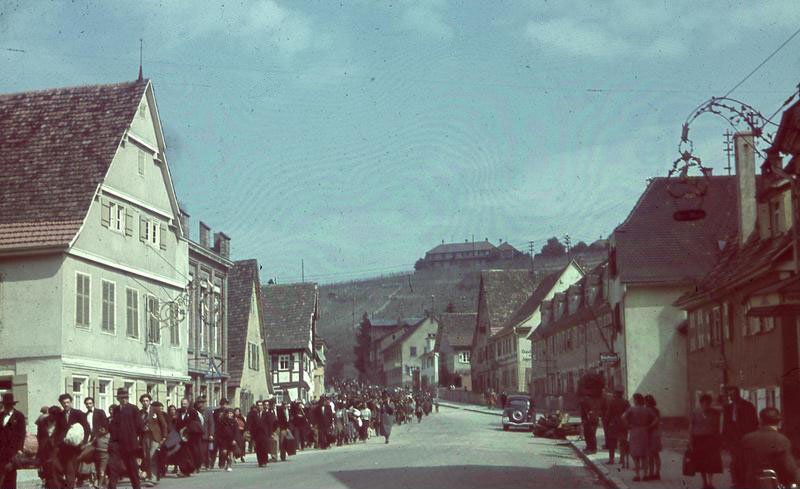
The Roma Holocaust, also known as Porajmos, was the systematic persecution and genocide of the Roma and Sinti during the Nazi regime and the Second World War.
Hundreds of thousands of Roma and Sinti became victims of the genocide committed by Nazi Germany and its allies: racial persecution, deportations, forced labour, medical experiments and mass murder.
Our goal is to make historical facts, archival documents and testimonies accessible, so that these crimes are never forgotten.



16 May – Roma Resistance Day
The Roma and Sinti were not only victims of Nazi persecution. They were also people who stood up and resisted.
According to post-war testimonies, in May 1944 the prisoners of the Roma family camp in Auschwitz-Birkenau learned that the Nazis were preparing to murder them in the gas chambers.
They refused to leave their barracks and prepared to defend themselves with improvised tools, for example shovels and hammers. According to the story handed down, the SS withdrew from the planned action.
The event is commemorated today on 16 May as Roma Resistance Day, although the exact date and course of the uprising described are not unambiguously confirmed by historical sources.
On 2 August 1944 the Nazis liquidated the Roma family camp and murdered the thousands of remaining prisoners in the gas chambers.
16 May is a symbol of the courage, dignity and resistance of the Roma and Sinti against the Nazi genocide.
On the night of 2–3 August 1944, approximately 4,300 of the last prisoners of the Roma camp were murdered in Auschwitz-Birkenau (older sources give 2,897).
In 2015 the European Parliament resolved that the European day of remembrance of the victims of the genocide of the Roma would be called the European Roma Holocaust Memorial Day; 2 August is used as the day of commemoration.
Commemoration of events
Preserving historical memory and commemorating the victims of the Roma Holocaust with dignity is one of the main priorities of the Institute for Memory and Justice of the Roma.
We pay particular attention to two important days of remembrance:
16 May – Roma Resistance Day
A day recalling the courage and resistance of the Roma and Sinti against Nazi persecution. It is a symbol of human dignity, courage and the determination to defend one's own life.
2 August – Memorial Day for the Victims of the Roma Holocaust
A day in memory of the victims of the Nazi genocide of the Roma and Sinti. It recalls the tragic night of 2–3 August 1944, when the Nazis liquidated the Roma family camp in Auschwitz-Birkenau and murdered thousands of its prisoners.
Through commemorative events, remembrance gatherings and educational activities we want to uphold historical truth, honour the memory of the victims and pass their stories on to future generations.
We do not forget the past, because memory is the foundation of a more just future.
Dubnica nad Váhom – the tragedy of 26 Roma victims (23 February 1945)
In November 1944 the Slovak authorities set up a detention camp in Dubnica nad Váhom, where approximately 700 Roma, including women and children, were held in very poor conditions. In the winter of 1944/45 it was taken over by the Germans.
On 23 February 1945, German soldiers, under the pretext of taking them to a hospital, took 26 sick Roma (20 men and 6 women) to the grounds of the local armaments factory, where they brutally murdered them.
During the exhumation, gunshot wounds were found on 18 of the victims; the others died of suffocation after being buried alive.
Today the tragedy is commemorated by a memorial with the names of the victims. The project that accompanies it is called “Ma bisteren!” (Do not forget!)
Their fates remain a painful testimony to the Roma Holocaust in Slovakia.
Documents
In this section we will gradually make available historical documents, archival records and period materials that document the persecution and genocide of the Roma and Sinti during the Nazi regime.
Each document will be accompanied by a short description, historical context and the original source.
Victims and testimonies
Behind every victim of the Roma Holocaust lies a human fate, a family and a story we must not forget.
In this section we will preserve and make available the personal testimonies of survivors, the memories of their descendants and documented stories of victims of Nazi persecution.
Our goal is to give the victims back their names, their faces and a dignified place in historical memory.
Every life had its value. Every story deserves to be heard.